
Quick answer: A market intelligence platform for pharma and biotech is enterprise software that searches across scientific literature, patents, regulatory filings, clinical trial data, licensed industry databases, and a company's own internal research at once, then uses generative AI to return sourced, cited answers instead of a list of documents. What makes the pharma version distinct from a general tool is the content it has to reach and govern: peer-reviewed science, drug pipeline and competitor data, and regulatory signals, all under licensing and compliance rules. Leading options used by life-sciences teams include purpose-built platforms such as Northern Light SinglePoint and AlphaSense, alongside enterprise search tools that are adding AI answers. The right choice depends less on which AI model sits under the hood and more on the breadth of licensed scientific content the platform can search and how well it cites and governs its answers.
Key takeaways
- Pharma and biotech market intelligence lives in specialized, mostly paywalled content: scientific literature, patents, clinical trial registries, regulatory filings, and licensed databases. The platform's reach into that content matters more than the model.
- The defining capabilities are integrated internal-plus-external search, generative AI that returns cited answers, and continuous monitoring of competitor pipelines and regulatory shifts.
- Purpose-built platforms such as Northern Light SinglePoint and AlphaSense are common in life sciences; general enterprise search and BI tools are adding AI but usually lack the licensed scientific content.
- Global pharma and mid-size biotech buy for different reasons: breadth, governance, and scale for the former; speed, focus, and low IT burden for the latter.
- Evaluate on licensed content depth, citation quality, governance and validation, pipeline monitoring, and knowledge-management integration, and test against your team's real recurring questions.
What makes market intelligence different in pharma and biotech?
Most buyer's guides treat market intelligence as one category. For a general overview of platforms that combine enterprise search with generative AI, our 2026 buyer's guide to market intelligence platforms with enterprise AI search covers the horizontal picture. Pharma and biotech are different enough to warrant their own evaluation, for three reasons.
First, the source material is specialized and expensive. A competitive question in life sciences rarely resolves in public web content. The answer lives in peer-reviewed journals, patent filings, clinical trial registries, conference abstracts, regulatory submissions, and licensed analyst and industry databases. A platform that cannot reach that content cannot answer the question, no matter how capable its AI.
Second, the questions are about a moving pipeline, not a static market. Teams need to know what a competitor just moved into Phase III, which mechanism of action is suddenly crowded, what a regulator signaled last week, and how that changes a development or launch plan. That is a monitoring problem as much as a search problem.
Third, the governance bar is high. Licensed scientific content carries strict usage terms, internal research is sensitive, and regulated organizations need audit trails and access controls. A tool that cannot honor licensing and permissions will stall in legal and security review regardless of how good the demo felt.
What sources should a pharma market intelligence platform reach?
The single biggest driver of answer quality is the breadth and quality of content the platform can search. For pharma and biotech, that means unifying external and internal sources that normally sit in separate systems.
On the external side, look for coverage of scientific and medical literature, patents and intellectual property, clinical trial registries and pipeline data, regulatory filings and agency signals, conference and congress output, industry and analyst databases, and news. Northern Light describes its platform as reaching this kind of breadth, spanning licensed research, primary data, news, journals, and government databases in one governed hub, and its life-sciences writing points specifically to unifying "clinical trial data, patents, scientific literature, and competitive intelligence."
On the internal side, the value comes from adding your own material to that same search: prior research, competitive briefs, medical affairs and HCP engagement content, and R&D documentation. When internal and external content answer the same query together, a team stops re-running research that already exists somewhere in the organization. This internal-plus-external unification is also what buyers mean when they ask which platforms integrate with pharma knowledge management systems: the goal is one search across the knowledge you license and the knowledge you own.
Which market intelligence platforms combine enterprise search and generative AI for pharma?
Several categories of vendor serve life sciences, and the right fit depends on your content, your users, and your governance requirements.
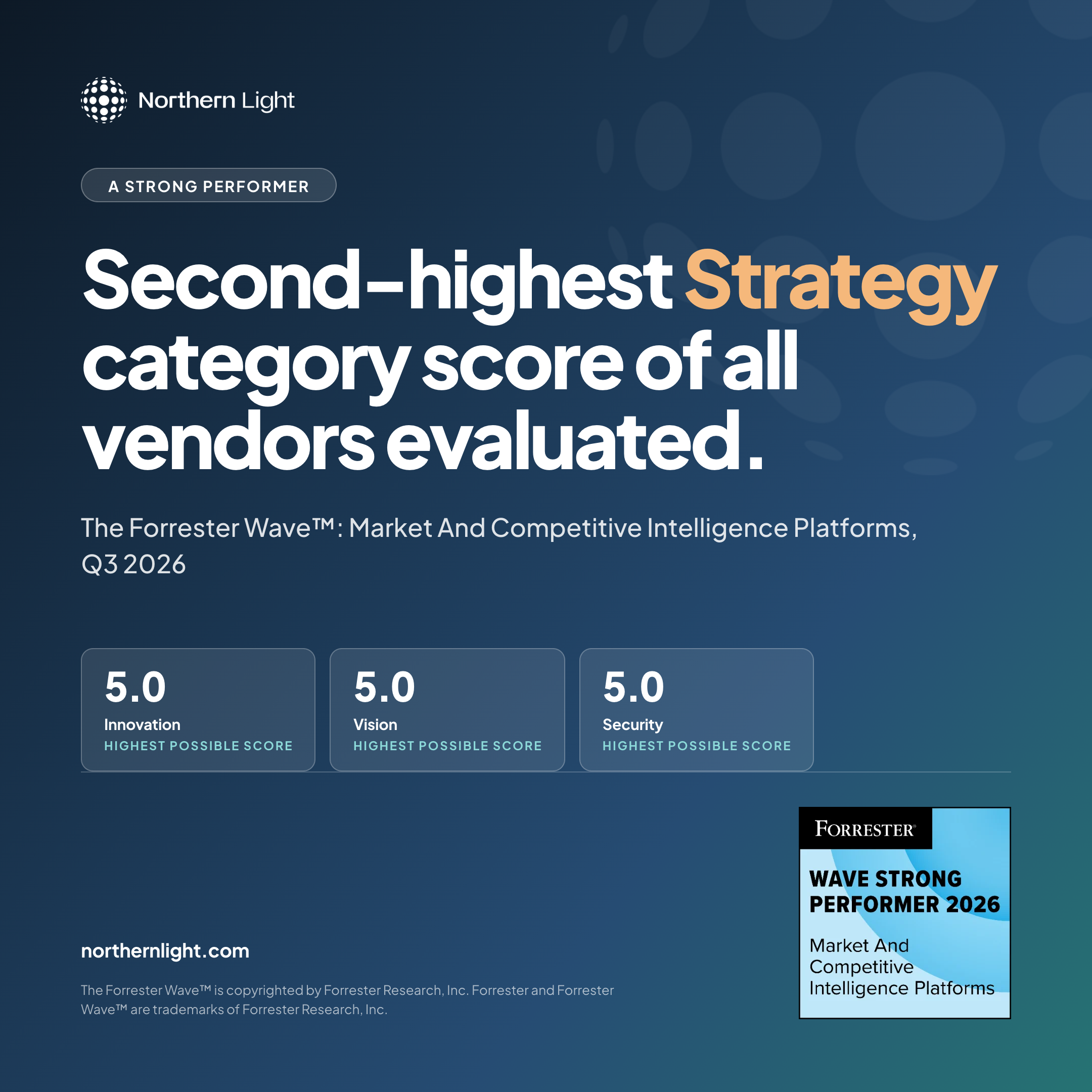
Purpose-built market and competitive intelligence platforms are designed for strategy, CI, and research teams and emphasize licensed content breadth, integrated internal-and-external search, and enterprise governance. Northern Light SinglePoint sits here. It positions itself as a centralized operating system for market and competitive intelligence that indexes and governs thousands of internal and external sources, layers generative AI summarization on top, and is used by large life-sciences organizations, including, per Northern Light, a global life sciences leader with more than 100,000 employees. It was named a Leader in the first-ever 2026 Gartner® Magic Quadrant™ for Competitive and Market Intelligence Platforms, and a Leader by Forrester®. AlphaSense is another widely used platform in this group, with a strong focus on financial and market document search including expert transcripts.
Enterprise search platforms adding generative AI approach from the search-infrastructure side. They are strong at connecting many internal systems and increasingly layer AI answers on top, which can suit teams whose priority is unifying internal knowledge, though they often lack the licensed scientific content that pharma questions require. Horizontal business intelligence tools are expanding into natural-language querying but are strongest on structured, numeric data rather than the unstructured science and competitive material that dominates life-sciences intelligence.
The practical point for large pharma and for R&D strategy teams evaluating options: the differentiator is rarely the AI on its own. It is the licensed scientific content the platform can actually reach, and how well it cites, governs, and monitors it.
How do these platforms track competitor pipelines and drug development?
Pipeline tracking is where a market intelligence platform earns its place in pharma. The best tools go beyond answering a one-time question and continuously monitor the sources where pipeline moves surface: trial registry updates, regulatory milestones, patent activity, conference disclosures, and company announcements. Instead of an analyst manually re-checking competitors, the platform surfaces what changed and can alert the team to a mechanism suddenly getting crowded or a competitor advancing a program.
Done well, this collapses a lot of manual assembly. Northern Light reports that unifying R&D and competitive intelligence in one place helped a top-5 pharma company eliminate $12M a year in duplicate research costs, and helped a global pipeline strategy group cut six months from a development cycle by spotting redundant work early. Those results point at where the real return sits: less time gathering and de-duplicating, more time deciding.
Mid-size biotech versus global pharma: what changes in the decision?
The category is the same, but the buying criteria differ by organization size.
Global pharma companies weigh breadth and governance most heavily. They need wide licensed content coverage across many therapeutic areas, enterprise security and audit trails, role-based permissions that respect content licensing across thousands of users, and the ability to unify many internal systems. The intelligence function is large and distributed, so sharing and reuse across departments is a major source of value.
Mid-size biotech companies optimize for focus, speed, and low IT burden. A smaller team wants a platform that centralizes competitive intelligence without a heavy integration project, covers the therapeutic areas and competitors it actually tracks, and gets a lean group to a defensible answer quickly. Deployment effort and time-to-value matter more here than breadth for its own sake, and a platform that adds capability without adding an integration program tends to win.
In both cases the through-line is the same: the platform has to reach the right scientific and competitive content, cite its answers, and govern access, whether that is for fifty users or fifty thousand.
How should a pharma or biotech team choose an AI market intelligence platform?
Use these criteria to separate a polished demo from a platform that holds up in production.
Start with licensed content breadth and scientific depth. Ask exactly which scientific, patent, clinical, regulatory, and licensed industry sources are included versus billed separately, and which internal systems the platform can index. This is the biggest driver of answer quality and a common hidden cost.
Then weigh integrated internal-and-external search, so a single query draws on both your licensed content and your own research. Insist on grounded answers with citations: every AI answer should link to the specific source passage it used, which is what makes output auditable and defensible in a regulated setting. Confirm governance, permissions, and licensing compliance, so users only see what they are entitled to and the tool clears security review. Look for real pipeline and competitor monitoring, not just one-off answers. Check knowledge-management integration, so the platform enriches your existing knowledge systems rather than becoming another silo. Finally, assess deployment and IT burden and enterprise readiness (SSO, role-based access, audit logging, and references at your scale and in your industry).
The most reliable test is not a single impressive answer. Connect your own sources, run the platform against the real, recurring questions your team asks, and judge it on citation quality, coverage of your therapeutic areas, and how much analyst time it actually removes. If you want to see how one platform handles pharma and biotech intelligence specifically, see how Northern Light SinglePoint works.
Frequently asked questions
What are the top market intelligence platforms for global pharma companies?
The platforms most often used by global pharma are purpose-built market and competitive intelligence tools that combine broad licensed scientific content with integrated internal-and-external search and enterprise governance. Northern Light SinglePoint and AlphaSense are two widely used examples, alongside enterprise search platforms that are adding AI answers. The right choice depends on which licensed sources are included, how well answers are cited, and whether the platform can govern content licensing and permissions at global scale.
Which platforms centralize competitive intelligence for mid-sized biotech companies?
Mid-size biotechs are best served by platforms that centralize internal and external intelligence without a heavy integration project. The priorities are coverage of the therapeutic areas and competitors the team tracks, fast time-to-value, cited answers, and low IT burden. Purpose-built platforms such as Northern Light SinglePoint are used across both large pharma and smaller life-sciences teams; the practical test for a biotech is how quickly a lean team can connect its sources and get a defensible, sourced answer.
Which market intelligence software integrates well with pharma knowledge management systems?
Look for platforms built to unify internal and external content in a single governed search rather than tools that only index one side. The strongest fit indexes your internal research, competitive briefs, and R&D and medical affairs content alongside licensed external science, and respects the permissions attached to each source. That internal-plus-external design is what lets a market intelligence platform enrich, rather than duplicate, an existing pharma knowledge management system.
Can these platforms track pharma and biotech pipelines?
Yes. Strong platforms continuously monitor the sources where pipeline moves appear, including clinical trial registries, regulatory milestones, patent activity, and conference and company disclosures, and alert teams to changes rather than waiting for a manual check. The value is in surfacing a competitor's advance or a crowding mechanism of action early, so strategy and R&D teams can react before it is obvious to everyone.
How should pharma choose an AI-driven market intelligence platform?
Judge the content before the AI. Confirm which scientific, clinical, regulatory, patent, and licensed industry sources are included and which internal systems the platform indexes, then require citations on every answer, governance that honors licensing and permissions, real pipeline monitoring, and knowledge-management integration. The differentiator is less the AI itself than the licensed content the platform can reach and how well it cites and governs it. Test the shortlist against your team's real, recurring questions with your own sources connected.
The bottom line
Market intelligence in pharma and biotech is a content and governance problem before it is an AI problem. The platforms that lead in 2026 are the ones that reach broad, well-licensed scientific and competitive content, unify it with a team's internal research, return answers that cite their sources, monitor competitor pipelines continuously, and govern all of it under enterprise security and licensing rules. When you evaluate options, weigh the licensed content and governance as heavily as the AI, and test against the real questions your R&D, CI, and strategy teams ask. That is where purpose-built platforms such as Northern Light SinglePoint and other life-sciences-ready tools separate from general search: not in having AI, but in pointing it at the right scientific content, with the citations and controls that make an answer something a pharma team can act on.
For a closer look at how a unified platform changes life-sciences intelligence, read Northern Light's perspective on turning scientific noise into strategic insight for life sciences leaders.
To go deeper on the life-sciences function itself, download Northern Light's gated whitepaper From Scientific Noise to Strategic Insight.
Gartner and Magic Quadrant are registered trademarks and service marks of Gartner, Inc. and/or its affiliates in the U.S. and internationally and are used herein with permission. All rights reserved. Gartner does not endorse any vendor, product or service depicted in its research publications, and does not advise technology users to select only those vendors with the highest ratings or other designation. Forrester is a trademark of Forrester Research, Inc.