About
LeadershipCareersBook a Live DemoA working guide to choosing a market and competitive intelligence platform in technology. What a platform has to be able to read, how to test whether a cited answer holds up, who has to sign off, and eight criteria worked in order.

We send the guide and occasional research updates. Unsubscribe anytime.
What is inside
Which analyst firms, financial sources and licensed databases are included, and which are billed separately. The biggest driver of answer quality and the most common hidden cost.
Whether an answer links to the specific passage or only to the document. That is what lets it survive being challenged in an executive meeting, which is where it will be used.
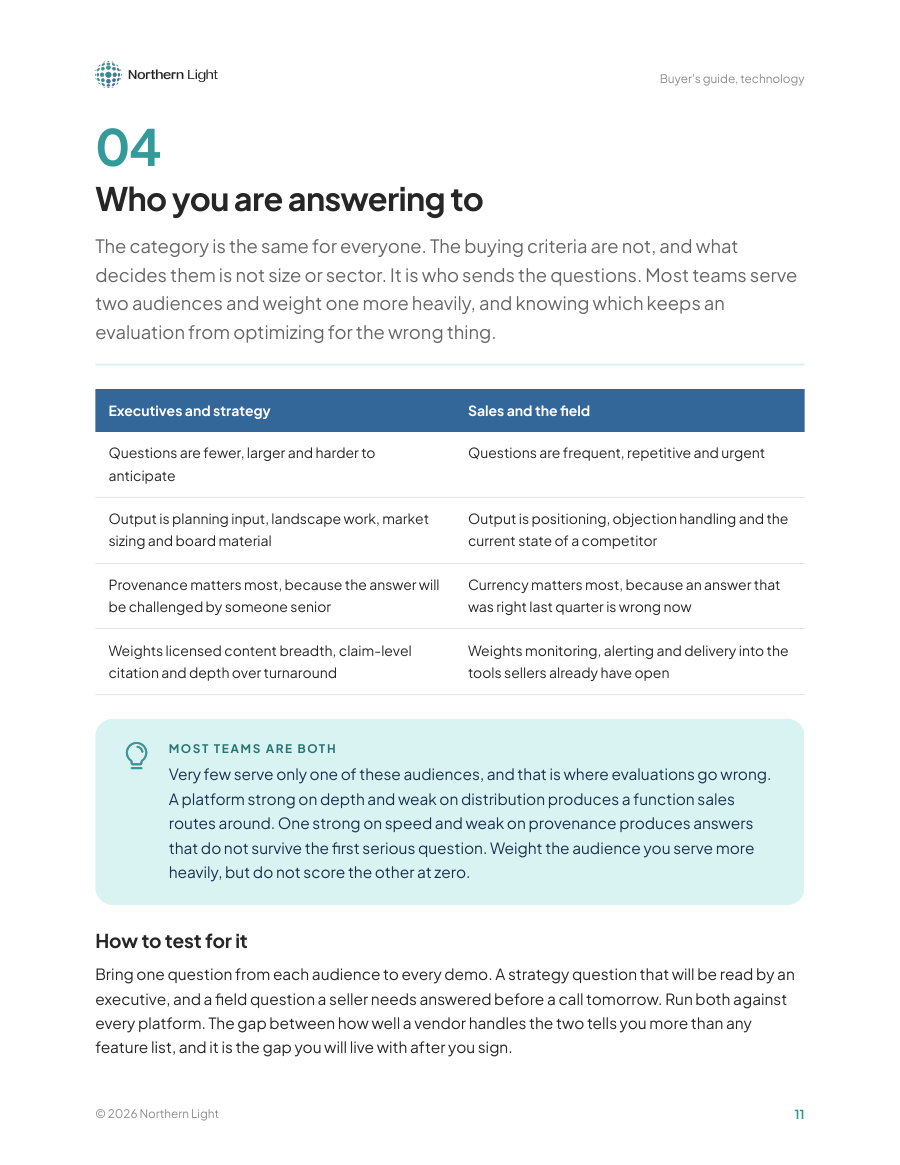
Executives and strategy weight provenance and depth. Sales and the field weight currency and delivery into the tools they already have open. Most teams serve both and still have to decide which sets the requirements.
The early ones constrain the later ones, and a platform that fails on the first two cannot be rescued by the last six.
A look inside


“If someone needs to go to an executive and make a point, it has to be thoroughly documented. Know where it came from. There is no, oh, I do not know, ChatGPT told me and now I cannot find it.”
Every platform in this category has AI now, and every vendor says grounded and traceable. What separates market and competitive intelligence platforms is the licensed research the AI can legally reach, what the platform does when the evidence is thin, and whether an answer arrives in time to change the decision it was asked about.
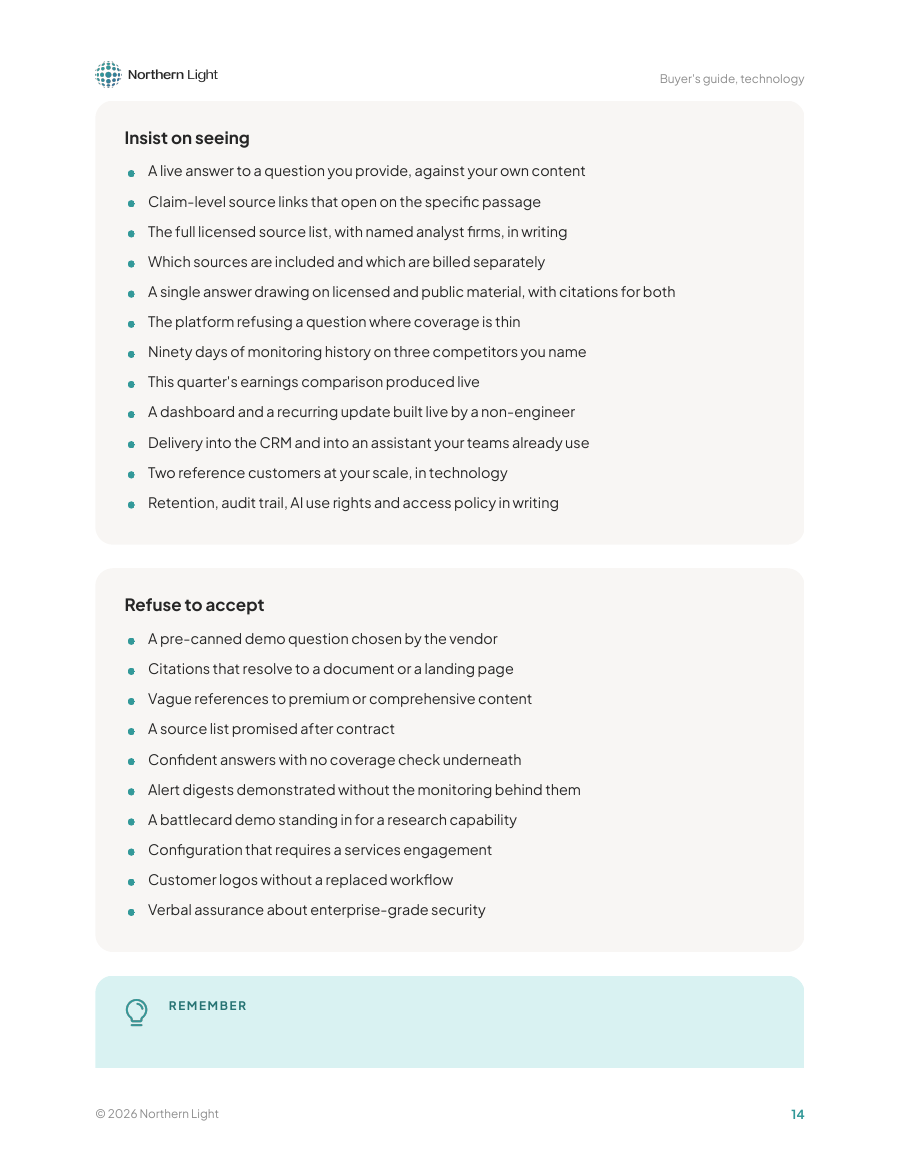
Ask for claim-level source links that open on the specific passage rather than the document. Then ask the platform something it should not be able to answer. A system that confirms there is enough trusted material before it answers, and refuses when there is not, is telling you something about every answer it does give.
Licensed content breadth and claim-level provenance are not scored like the other six criteria. A platform that fails either is out regardless of its total score, because neither can be remediated after contract.
Usually not. Sales enablement tools distribute a competitive position well and do not produce the research that should inform it, because they draw on signals crawled from the public web with no licensed analyst research underneath. The question is rarely whether to replace what you have, it is which tool is the hub.
Two audiences, and whichever sends most of the questions decides the buying criteria. Executives and strategy weight provenance, licensed content breadth and depth over turnaround. Sales and the field weight currency, monitoring and delivery into the tools sellers already have open. Most teams serve both and still have to choose which one sets the requirements.